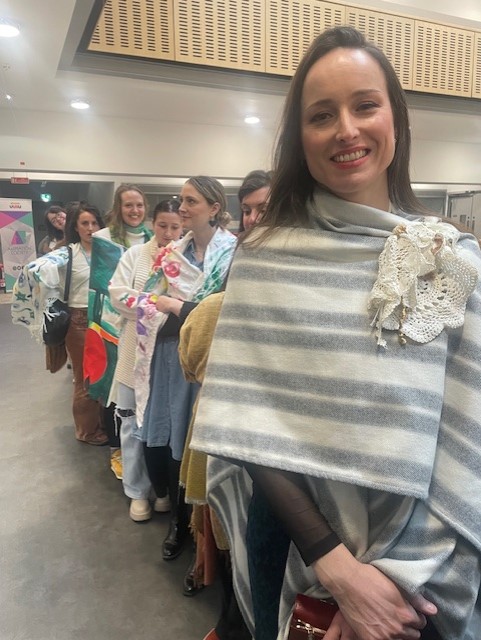
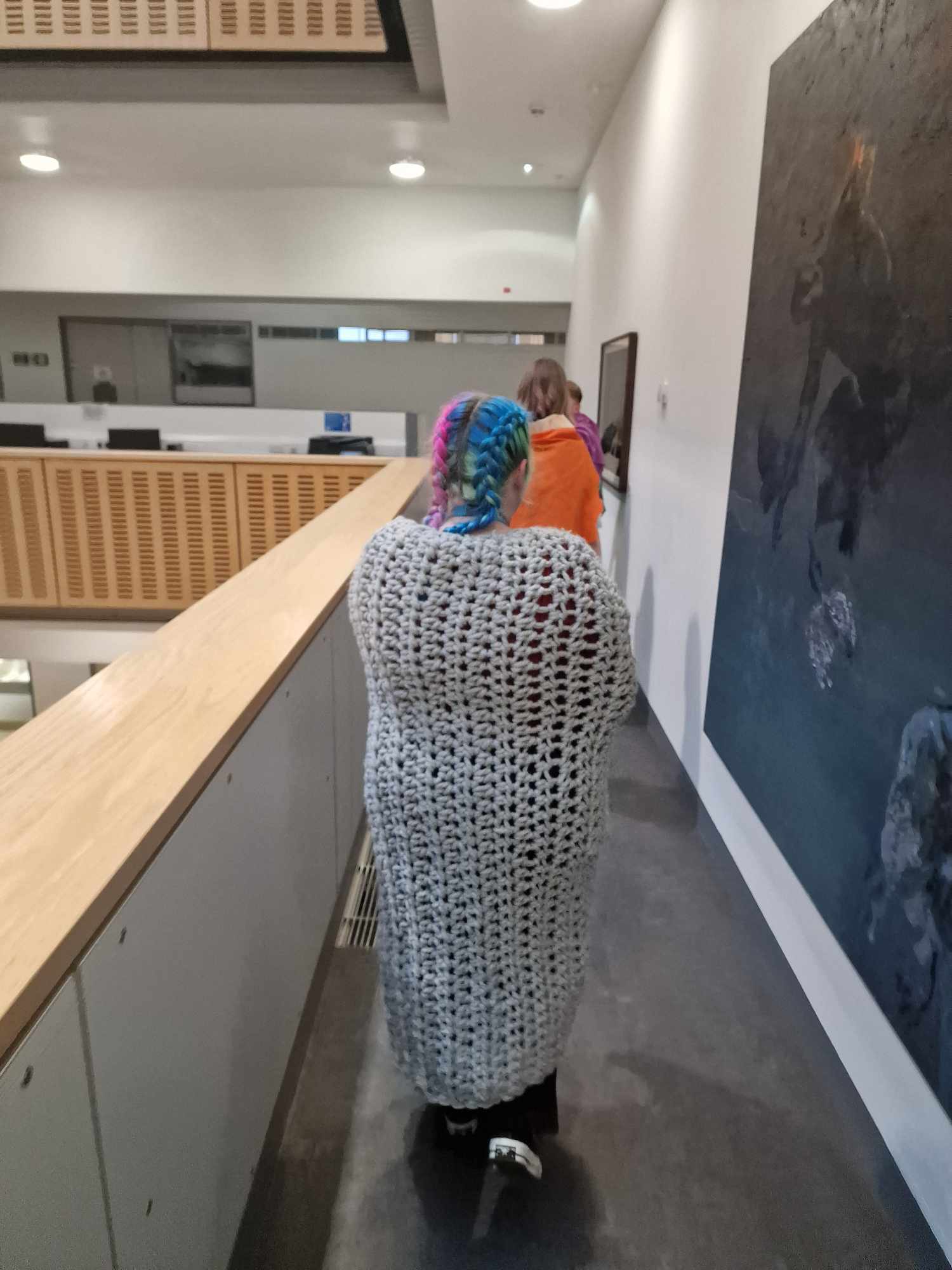
Figure 1 and Figure 2, MSc Art Psychotherapy learners wearing the capes, blankets, cloaks and shawls they made as wearable art during a poetry workshop. These items could also be considered portable ecologies of care (MSc Art Psychotherapy, 2024).
“The mental health conditions of higher education students in 2022-2023 is almost five times higher than a decade earlier” (UK Parliament, House of Commons, 2025) (Figure 2)
“The consequences of mental health issues for students range from poor academic performance and dropping out of university to self-harm and suicide” (UK Parliament, House of Commons, 2025)
Social and emotional support networks within universities are key to contextual safeguarding, “which recognise the effects of distress, trauma, loneliness and discomfort of learners” (Whitaker, 2025). Contextual safeguarding refers to the duty of care provided by a university to provide a secure base for learning that recognises the adversities of mental health concerns that learners face. At Ulster University the most common reasons for students seeking wellbeing services are “stress, anxiety, depression and low mood”(Student Wellbeing, Ulster University, 2025). A recent research study at Ulster University found that “half of new undergraduate students had reported experiencing a mental health issue at some point during their life. “The most common problems included panic attacks (41.2%), suicidality (31%), major depressive episode (24.2%) and generalised anxiety disorder (22.6%). The study also found that rates were higher among LGBTQ+ students and those experiencing financial difficulties” (Ulster University, 2023).
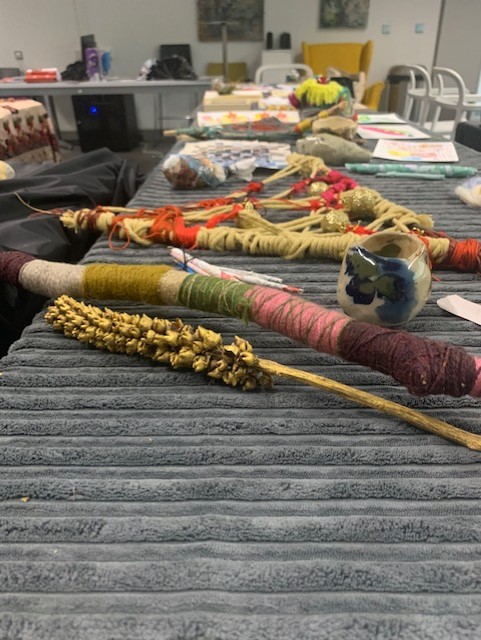
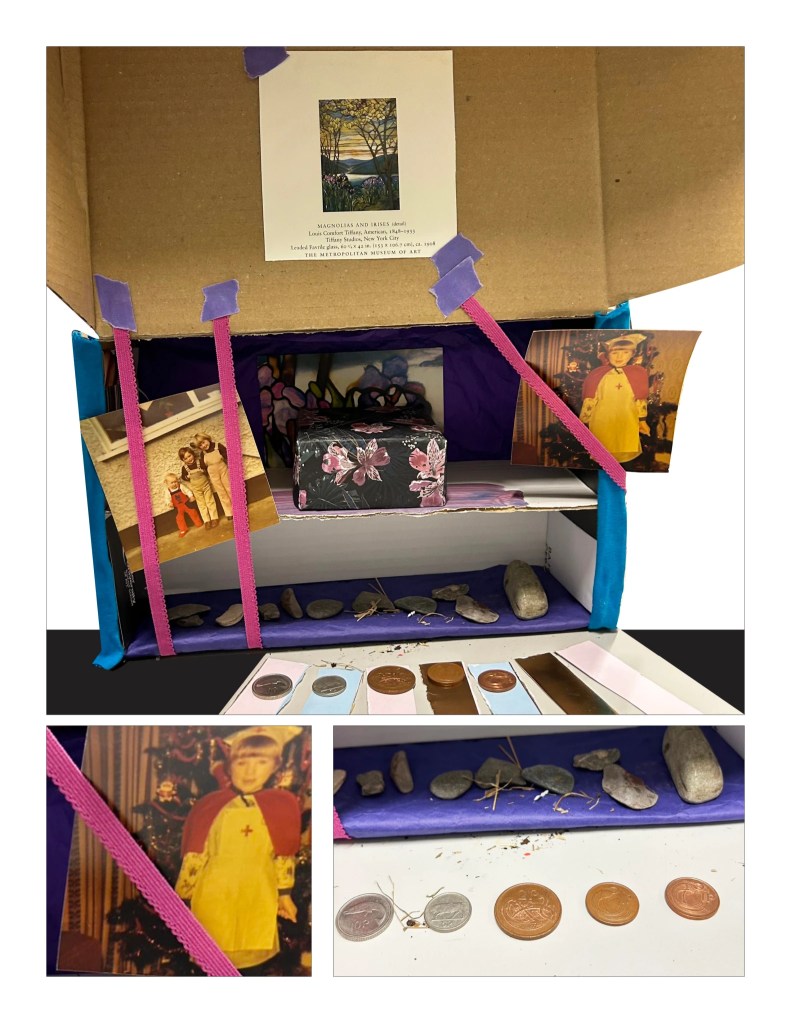
Figure 3 and 4. Left Photograph: Make Yourself at Home was a display of table based installations by art psychotherapy trainees at The Belfast School of Art, in 2023. Right Photograph: Assembling a narrative with objects from home by art psychotherapy graduate Sinéad Kiernan (MSc Art Psychotherapy, 2023b).
An ecology of care is a classroom design based on providing a comfort zone for learners. It uses neuroscience research to facilitate the production of public homeplace. A public homeplace is a “site of creativity [and] collaborative wellness…which creates a shared public culture” of agency and active citizenship (Timm-Bottos, 2023). When a classroom and university operate as a public homeplace there is a hospitality of welcome, an environment of composure and the capacity for a learner to become a changemaker and influencer.
“Students who experience poor mental health are more likely to withdraw, underperform and be dissatisfied with their learning and experience. On the other hand, positive wellbeing has been associated with better and deeper learning, higher levels of creativity and problem solving, higher achievement and better levels of student satisfaction” (Hughes et al., 2022, cited by Whitaker, 2025).
Learners’ felt sense of a learning environment is perceived through neuroperceptors which assess the safety and potential risk of stress and agitation. For learners impacted by mental health adversity, hypervigilance is a survival tool of neurobiology to perceive threatening circumstances. An opportunity to gather around a table of welcome is a check-in point, a place to arrive before learning begins. It is the preparation for cognitive processing “to support the functioning of the parasympathetic nervous system which facilitates communication and emotional regulation” (Whitaker, 2025).
“Before the brain understands and makes meaning of an experience the autonomic nervous system has assessed the situation and initiated a response…We are continuously broadcasting and receiving messages of welcome and warning in response to the information we receive through neuroception” (Dhana, 2025, cited by Whitaker, 2025).
“Aliveness refers to a state of life and awareness, consciousness and vitality” (Khan, 2023)
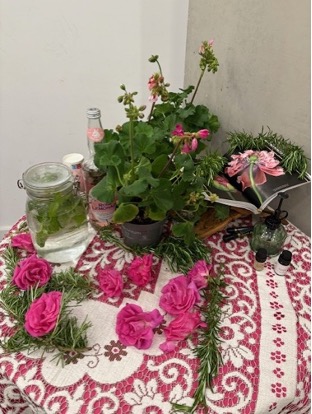
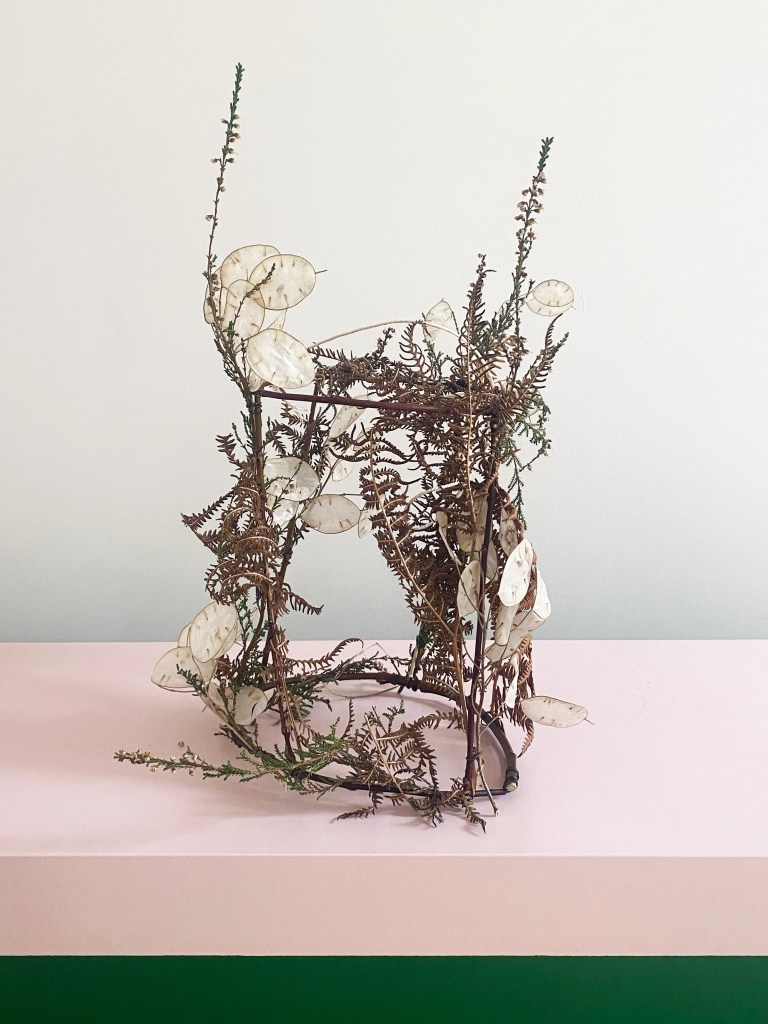
Figure 5 and Figure 6. Photo Description: Two ecology of care display tables using flowers to feature the restorative capacities of using natural materials for attention restoration within a classroom setting. Attention Restoration Theory suggests that natural materials encourage immersion and soft fascination two features that stimulate an escape from habitual patterns of rumination, a cycle of negative thinking apparent within anxiety, low mood and depression (Ohly et al., 2016). Left Photograph: An ecology of care table presented at the Wellbeing and Belonging Showcase at Ulster University (June, 2025). Right Photograph: A sculpture by art psychotherapy graduate Sarah Wilson, titled As We Are, for an art making studio on the theme of Carriers of Life (MSc Art Psychotherapy, 2023a).
“Students are more likely to learn well in classrooms in which they have a sense of connection, support and psychological safety —i.e. the social learning environment is a safe place in which to experiment, make mistakes and correct misconceptions. This has implications for inclusion, as students who are marginalised by in-lesson experiences or by curriculum content, are likely to feel a reduced sense of belonging and lower levels of psychological safety” (Advance HE, 2025, Education for Mental Health Toolkit).
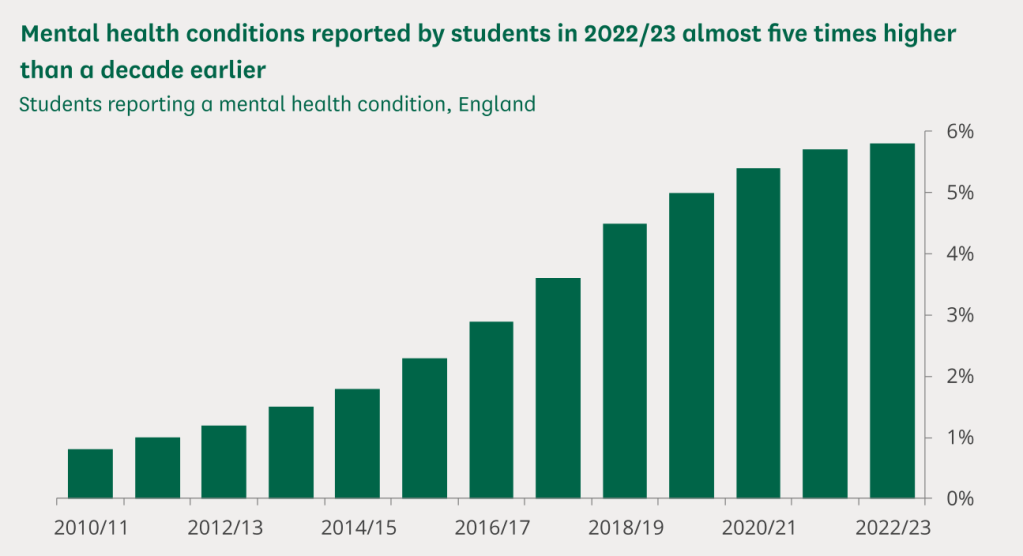
Figure 7. (UK Parliament, House of Commons, 2025), Prevalence of Mental Health Issues Among University Students.

Figure 8. “The THRIVE Model, designed by students and inspired by this attribute, is part of a broader wellbeing initiative that encourages students to take simple, everyday actions to support their mental health and emotional wellbeing. Rooted in learning and student experience, THRIVE promotes six practical, learning-based actions that help prevent mental health issues and foster resilience, so every student has the opportunity to thrive during their time at Ulster and beyond” (Ulster University, 2025). The THRIVE Model’s everyday actions reflect the goals of an ecology of care encouraging students to “get back on track” and “learn with purpose” (Ulster University, 2025).
Advance HE Education for Mental Health Toolkit
In a psychologically safe learning environment, students feel safe to make mistakes, take risks to further their learning and thinking and ask for help and support when needed.
Psychological safety makes it more likely that students will engage in classroom activities and debates – this supports learning and helps develop a sense of community and belonging.
An unsafe environment can raise anxiety and lead to class avoidance and/or disengagement.
Psychological safety must be planned for and time must be devoted to establishing and maintaining a healthy classroom culture.
Students will need to witness a safe environment being maintained consistently before they will trust it.
Figure 9. Advance HE (2025) Education for Psychological Safety, Mental Health Toolkit. The diagram supports the findings of neuroscience within education to create a secure base for learning which incorporates Ulster University’s Wellbeing in the Curriculum Model and Principles and Qualities of Learning, Teaching and Student Experience.
The Artistry of Teaching, edited by Helen King, encourages creativity and improvisation in higher education teaching as a way to promote spontaneity. “Mechanical following of procedures can only be effective in a perfectly predictable world, and this is not the world of teaching” (King et al., 2025, p. 3). Incorporating opportunities for flourishing within higher education, recognises the significance of providing safety and a secure base for learning attachment in order to motivate persistence. The discipline of neuropedagogy (also referred to as neuroeducation) approaches higher education learning and teaching through the science of how the brain works. Micro-learning and multi-sensory learning are two outcomes of this research which support the provision of an ecology of care incorporating sensory experiences (Walden University, 2025).
References
Advance HE (2025) Education for mental health toolkit. Available from: https://www.advance-he.ac.uk/teaching-and-learning/curricula-development/education-mental-health-toolkit#ToolkitOverview [Accessed September 2 2025].
Dana, D. (2025) Rhythm of regulation. Available from: https://www.rhythmofregulation.com/polyvagal-theory[Accessed 10 August 2025
King, J., Bale, R., Corradini, E., Fossey, P., Gannaway, D., Morantes-Africano, L., Mudd, S. and Potter, J. (2025) Introduction. In King, H. ed. The artistry of teaching in higher education: Practical ideas for developing creative academic practice. London: Routledge, 1-15.
MSc Art Psychotherapy (2023a) Forms for holding. 16 February. Available from: https://arttherapytrainingandstudiogroups.wordpress.com/2023/02/16/forms-for-holding/ [Accessed September 7 2025].
MSc Art Psychotherapy (2023b) Found objects: Assembling narratives. 19 October. Available from: https://arttherapytrainingandstudiogroups.wordpress.com/2023/10/19/found-objects-assembling-narratives/ [Accessed 7 September 2025].
MSc Art Psychotherapy (2024a) Poetry therapy: Capes, cloaks and creative conversations. MSc Art Psychotherapy course blog: Materials, methods and practice. 17 February. Available from: https://arttherapytrainingandstudiogroups.wordpress.com/2024/02/17/poetry-therapy-capes-cloaks-and-creative-conversations/ [Accessed 6 September 2025].
Ohly, H., White, M. P., Wheeler, B. W., Bethel, A., Ukoumunne, O. C., Nikolaou, V., and Garside, R. (2016) Attention Restoration Theory: A systematic review of the attention restoration potential of exposure to natural environments. Journal of Toxicology and Environmental Health, Part B, 19 (7), 305–343. https://doi.org/10.1080/10937404.2016.1196155
Student Wellbeing, Ulster University (2025) Interview with Drew Neill, Ulster University’s Wellbeing Manager). Personal Communication.
Timm-Bottos, J. (2023) The necessity of public homeplace in urban revitalisation. Available from: https://arthives.org/necessity-public-homeplace-urban-revitalization [Accessed 1 September 2025].
UK Parliament, 2025) Prevalence of mental health issues among university students. Available from: https://commonslibrary.parliament.uk/research-briefings/cbp-8593/ [Accessed 1 September 2025].
Ulster University (2023) Ulster University student wellbeing study highlights the prevalence of mental health issues among young people. Available from: https://www.ulster.ac.uk/news/2018/january/ulster-university-student-wellbeing-study-highlights-prevalence-of-mental-health-issues-among-young-people [Accessed 1 September 2025].
Ulster University (2025) Wellbeing in the Curriculum Model. Available from: https://www.ulster.ac.uk/learningenhancement/resources/wellbeing-in-the-curriculum [Accessed 10 August 2025].
Walden University (2025) What is neuroeducation? Available from: https://www.waldenu.edu/news-and-events/what-is-neuroeducation [Accessed 7 September 2025].
Whitaker, P. (2025) An Ecology of Care in Higher Education: The Studio Classroom, PHE 720, Action Research Project 2024-2025. Ulster University. Unpublished Project Report.
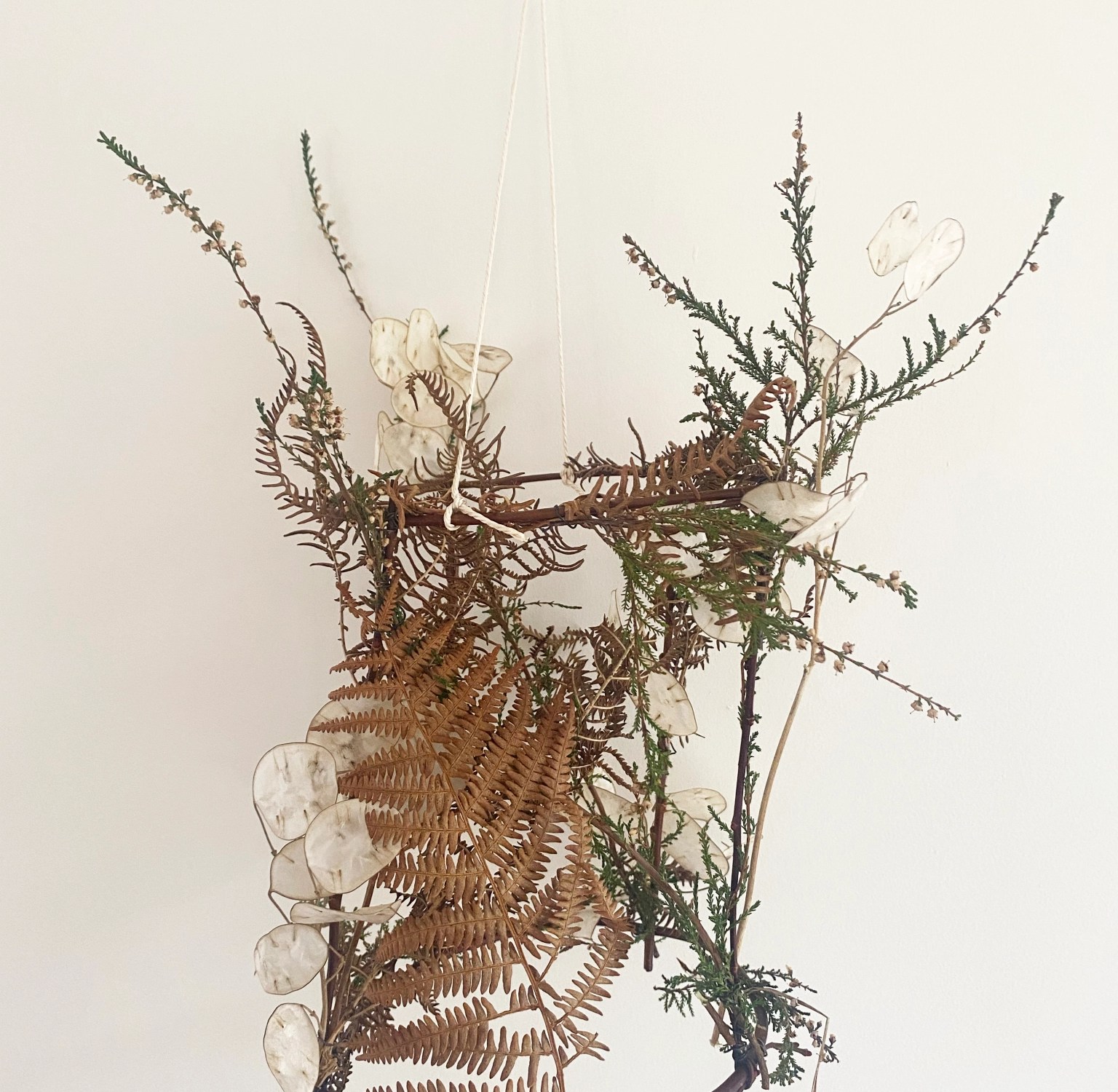
Featured Image Photo Credit: Sarah Wilson, As We Are, sculpture produced for the Carriers of Life art making studio. MSc Art Psychotherapy blog: https://commonslibrary.parliament.uk/research-briefings/cbp-8593/
 Ecologies of Care in Higher Education